
Cataract Surgery Expectations
Choosing Your New Lens
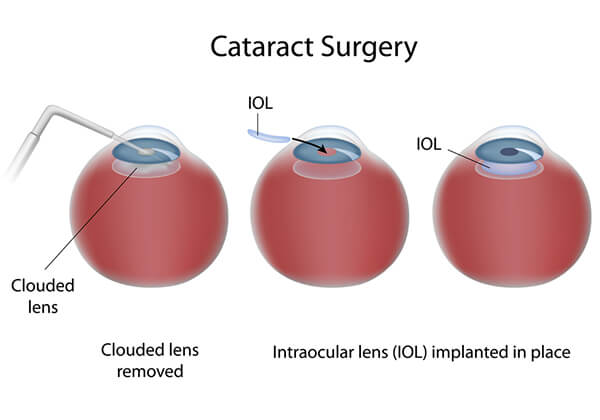
During cataract surgery, your cloudy lens is replaced with an intraocular lens (IOL). The lens you choose affects how well you’ll see up close, far away, and in between, and how much you’ll rely on glasses afterward.
Your Options
- Standard lens: Clear vision at one distance, usually far. You’ll likely need glasses for reading. Typically covered by insurance.
- Astigmatism-correcting (toric) lens: Corrects astigmatism for sharper distance vision.
- Multifocal / extended-range lens: Clear vision at multiple distances, so you’ll depend less on glasses. Some patients notice halos at night.
- Laser-assisted surgery: An optional add-on that brings extra precision to the procedure and can help correct astigmatism.
Advanced lenses and laser-assisted surgery involve an additional out-of-pocket cost.
Which Is Right for You?
The best lens depends on two things: your eye health and how you live. Your surgeon will measure your eyes at your evaluation. What they can’t measure is what matters most to you: reading, screens, driving at night, golf, or simply not reaching for glasses.
Before Your Visit
Think about the activities you want to see clearly for, and how much you’d like to be free of glasses. Bring those thoughts to your evaluation, and your surgeon will help you find the right fit.